Karcher Vacuum Cleaner Bags: Ensuring Peak Performance for Wet/Dry and Canister Models
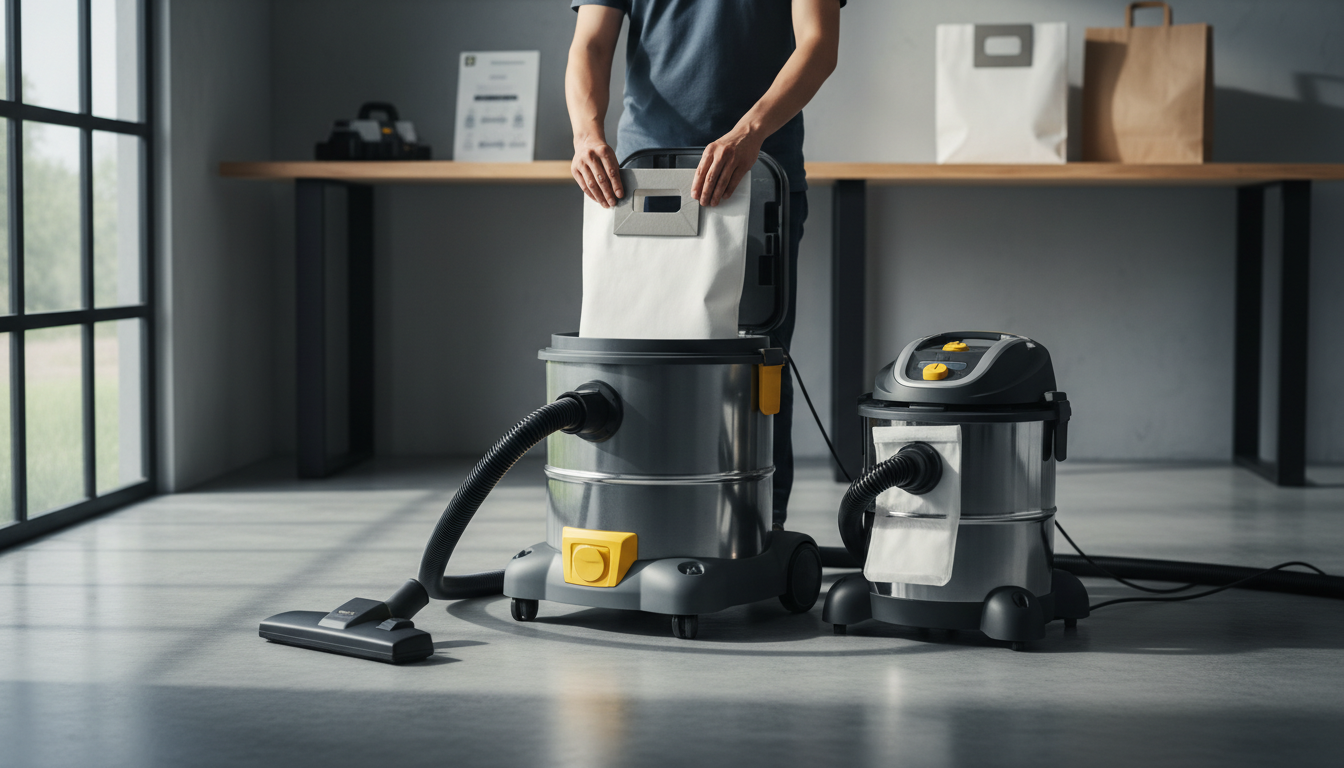
Unlock Peak Performance: Your Guide to Karcher Vacuum Cleaner Bags
For Karcher vacuum owners, selecting the correct replacement bags is crucial for maintaining the optimal performance and longevity of their wet/dry and canister models. The right karcher vacuum cleaner bags directly influence suction power, filtration efficiency, and the overall cleanliness of your environment. Using an incompatible or substandard bag can compromise your vacuum's ability to capture dust and debris, potentially leading to reduced effectiveness and increased wear on the appliance.
This guide aims to equip Karcher owners with the knowledge needed to confidently choose the appropriate bags. We'll explore the specific considerations for wet/dry vacuums, where bags often serve a different function than in dry-only canister models, and discuss the trade-offs between bagged and bagless operation where applicable. Understanding these distinctions is key to ensuring your Karcher vacuum continues to deliver the powerful, reliable cleaning it was designed for, whether you're tackling workshop dust, household spills, or outdoor debris.
Beyond the Basics: Unpacking Karcher Vacuum Bag Technology
Karcher vacuum cleaner bags are engineered with specific applications in mind, particularly for their range of wet/dry and canister models. Understanding the underlying technology can help Karcher owners select the most appropriate bags to maintain their vacuum's performance and longevity. These bags are not merely dust receptacles but active components in the vacuum's filtration and debris management system.
Karcher bags often feature a multi-layer fleece construction, which offers distinct advantages over traditional paper bags. This fleece material is notably tear-resistant, a crucial attribute for wet/dry vacuums that frequently encounter coarse, sharp, or damp debris. This durability helps prevent bag rupture during heavy-duty cleaning tasks, safeguarding the vacuum's internal components from contamination and maintaining consistent suction.
The design of these bags also plays a role in sustaining high suction power and effective dust filtration. The multi-layer structure allows air to pass through efficiently while trapping fine dust particles. This contributes to a cleaner exhaust air stream and helps prevent the vacuum's main filter from clogging prematurely, which is a common cause of reduced suction in bagless systems. For Karcher wet/dry models, the bag's ability to handle both dry dust and damp materials without compromising integrity is a key differentiator.
When considering Karcher bags, it's vital to distinguish between options designed for general dry vacuuming and those specifically rated for wet/dry use. While many Karcher wet/dry vacuums can operate without a bag for wet pickup, using the correct bag for dry debris is essential. Bags intended for wet/dry vacuums are constructed to withstand the occasional dampness from residual moisture or vacuuming slightly wet material, whereas standard dry-use bags would likely degrade and tear under such conditions. Selecting the appropriate bag ensures optimal performance, extends the life of internal filters, and provides a hygienic way to dispose of collected waste.
Find Your Match: A Guide to Karcher Vacuum Bag Compatibility
Selecting the correct vacuum cleaner bags for your Karcher wet/dry or canister model is essential for maintaining optimal suction power and filtration. Karcher designs specific bags for different series, making precise identification key. Understanding your vacuum's model number and cross-referencing it with bag specifications ensures you choose compatible "vacuum cleaner bags karcher" for effective cleaning.
To confidently identify the right bags, begin by locating your vacuum's model information. This is typically found on a label affixed to the appliance itself, often on the base, side, or back. Karcher model numbers for wet/dry vacuums frequently start with "WD" followed by a number, such as WD 2, WD 3, WD 4, WD 5, or WD 6. Note this exact model number.
Once you have your model number, you can determine the appropriate bag type. Karcher often groups compatibility for its wet/dry series:
- WD 2 and WD 3 Series: Bags designed for these models are typically compatible across both, often specified as "WD 2/3."
- WD 4, WD 5, and WD 6 Series: A common bag type serves these larger capacity wet/dry vacuums, frequently listed as compatible with "WD 4, WD 5, WD 5/P, & WD 6."
Always cross-reference the specific part number or compatibility list provided on the packaging of the replacement bags with your vacuum's model. Karcher bags are often constructed from tear-resistant fleece, designed for high suction power and effective dust filtration, even with coarse and damp dirt. Confirming the bag's specifications against your vacuum's requirements helps avoid misfits that can compromise performance or damage your machine.
Bagged or Bagless? Navigating Karcher's Wet/Dry Vacuum Options
Karcher wet/dry vacuums offer versatility, allowing users to tackle various cleaning tasks from fine dust to wet spills. A key decision for owners of these models is whether to operate with a filter bag or to utilize the vacuum in a bagless configuration. This choice significantly impacts hygiene, maintenance, and the type of debris that can be effectively collected.
Using a filter bag, particularly the tear-resistant fleece variants offered by Karcher, presents several advantages. Bags effectively contain dust and fine particles, leading to a cleaner emptying process and reduced exposure to allergens. They also contribute to more consistent suction power when dealing with fine dust, as the bag acts as an initial filter, protecting the main filter from premature clogging. This protection means the primary filter requires less frequent cleaning, simplifying maintenance routines.
Conversely, bagless operation is often more suitable for specific scenarios. When vacuuming coarse debris, large objects, or significant amounts of damp dirt and liquids, operating without a bag can be more practical. This prevents bags from quickly filling, tearing, or becoming saturated, which could otherwise impede airflow and damage the bag itself. For purely wet applications, bags are typically not used.
Regardless of whether a bag is used, the main filter in a Karcher wet/dry vacuum plays a critical role. When operating bagless, especially with dry dust, the main filter bears the full brunt of incoming particles. Therefore, regular cleaning of this filter is essential to maintain performance. Neglecting filter maintenance when operating bagless will inevitably lead to restricted airflow, resulting in a noticeable and detrimental loss of suction power. Some Karcher models feature integrated filter cleaning mechanisms, but for others, manual cleaning is required to ensure optimal efficiency.
What to Look For: Key Criteria for Karcher Vacuum Bag Selection
Selecting the correct replacement bags for your Karcher wet/dry or canister vacuum is crucial for maintaining its performance and ensuring effective cleaning. The right bag not only fits properly but also contributes to the vacuum's suction power and filtration capabilities. Consider these key criteria when making your choice:
- Material Durability and Tear-Resistance: For Karcher wet/dry models, bags often encounter coarse debris, construction dust, and even damp materials. Look for bags constructed from robust, multi-layer fleece, which are designed to be highly tear-resistant. This material helps prevent ruptures, especially when vacuuming heavy or sharp objects, and maintains integrity even with some moisture. For canister vacuums, while less prone to damp debris, durable material still prevents premature tearing from sharp-edged dry particles.
- Filtration Efficiency and Dust Retention: The bag's ability to capture and retain dust directly impacts air quality and motor longevity. High-quality bags, particularly those with multiple fleece layers, offer superior filtration, trapping fine dust particles and allergens within the bag. This is especially important for canister vacuums used in indoor environments, and for wet/dry models when used for dry vacuuming, preventing fine dust from recirculating into the air or reaching the motor filter prematurely.
- Pack Size and Cost-Effectiveness: Evaluate the number of bags included in a pack against your typical usage frequency. If you use your Karcher vacuum frequently or for large-scale tasks, a larger pack size may offer better long-term value and reduce the need for frequent reordering. Conversely, for occasional use, a smaller pack might be more suitable. Consider the per-bag cost to assess overall cost-effectiveness.
- OEM vs. Third-Party Bags and Compatibility: Karcher offers Original Equipment Manufacturer (OEM) bags specifically engineered for their models. These are designed to ensure precise fit, optimal airflow, and filtration performance. Third-party bags are also available, often at a lower cost. When considering third-party options, prioritize those that explicitly state compatibility with your specific Karcher model number and have verifiable quality assurances. An ill-fitting or poorly constructed bag, regardless of brand, can compromise suction, filtration, and potentially risk damage to the vacuum's motor by allowing dust ingress. Always verify compatibility before purchase.
Extend Life & Efficiency: Tips for Karcher Bag Installation and Care
Proper installation and timely replacement of Karcher vacuum cleaner bags are fundamental to maintaining your appliance's performance, filtration efficiency, and overall lifespan. Whether you own a robust wet/dry model or a dedicated canister vacuum, understanding these practices ensures your Karcher operates at its best, preventing common issues like reduced suction or dust re-emission.
Secure Bag Installation
A correctly installed bag forms a sealed chamber within your Karcher vacuum, directing airflow and preventing debris leakage.
- Align the Collar: Carefully match the bag's cardboard or plastic collar with the intake port inside the vacuum's dust compartment. This alignment is crucial for a tight seal.
- Engage Locking Mechanisms: Many Karcher models feature clips, levers, or rubber seals designed to hold the bag firmly in place. Ensure these are fully engaged according to your specific model's instructions. A loose fit can lead to dust escaping into the motor compartment.
- Check for Tears: Before installation, quickly inspect the new bag for any manufacturing defects or tears. Karcher bags are often made from tear-resistant fleece, but a pre-existing flaw can compromise performance.
- Consult Your Manual: Always refer to your Karcher vacuum's user manual for precise, model-specific installation steps, as configurations can vary between wet/dry and canister units.
Knowing When to Replace Your Bag
Timely bag replacement is critical for consistent cleaning power and preventing strain on your vacuum's motor.
- Reduced Suction Power: This is the most common indicator. As a bag fills, airflow is restricted, causing a noticeable drop in suction. If your vacuum isn't picking up debris effectively, check the bag first.
- Visible Fullness: For Karcher models with transparent compartments or when opening the vacuum, a bag that appears visibly full or distended is ready for replacement. Do not overfill, as this can lead to tears or blockages.
- Dust or Odor Emission: If you notice fine dust escaping from the vacuum's exhaust, or if a persistent, stale odor is present, the bag may be overfilled, improperly sealed, or past its effective filtration capacity. This is particularly relevant for wet/dry vacuums that may have collected damp debris.
- Indicator Lights: Some Karcher models include a "bag full" indicator light or gauge. Trust this feature as a reliable prompt for replacement.
Complementary Vacuum Maintenance
While bag care is essential, it's part of a broader maintenance routine that contributes to your Karcher vacuum's efficiency.
- Filter Inspection: Regularly check and clean or replace other filters in your Karcher vacuum, such as the main cartridge filter in wet/dry models. Clogged filters can mimic the symptoms of a full bag and reduce overall suction.
- Hose and Nozzle Checks: Periodically inspect the vacuum hose, extension wands, and floor nozzles for any blockages. Debris lodged in these components can severely restrict airflow, regardless of the bag's status.
- Exterior Cleanliness: Keep the exterior of your vacuum clean, especially around seals and latches, to ensure proper compartment closure and prevent dust from entering sensitive areas.
Karcher Vacuum Cleaner Bags: Your Questions Answered
Understanding the nuances of Karcher vacuum cleaner bags is key to maintaining your appliance's performance and ensuring effective cleaning. Here are common questions Karcher owners have when selecting or replacing bags for their wet/dry and canister models.
-
What are the benefits of using Karcher fleece filter bags? Karcher fleece filter bags offer several advantages, particularly for wet/dry and heavy-duty applications. They are often constructed from multiple layers of highly tear-resistant fleece material, which is crucial when vacuuming coarse, sharp, or even damp debris without risk of rupture. This durability helps protect the vacuum's internal components. Beyond robustness, these bags are designed to maintain high suction power even as they fill, and they provide effective dust filtration, contributing to cleaner exhaust air and reducing the frequency of main filter cleaning. For wet/dry models, their construction can handle a wider range of debris types compared to standard paper bags.
-
Can I use third-party bags with my Karcher vacuum? While third-party bags might seem like a cost-effective alternative, using them carries potential risks and trade-offs. Karcher's genuine bags are engineered to precise specifications for fit, airflow, and filtration performance within their specific vacuum models. Non-genuine bags may not fit perfectly, leading to leaks that allow dust into the motor compartment or reduce suction efficiency. Their filtration capabilities might also be inferior, compromising air quality. In some cases, using non-OEM parts could potentially affect warranty coverage. For optimal performance and to safeguard your vacuum, verifying compatibility and considering genuine Karcher accessories is a prudent approach.
-
How often should I change my Karcher vacuum bag? The frequency of changing your Karcher vacuum bag depends on several factors, including the type of debris collected, the volume of vacuuming, and the specific model. There's no fixed schedule, but general indicators include:
- Reduced Suction: If you notice a significant drop in your vacuum's suction power, the bag is likely full or nearly full.
- Fill Indicator: Many Karcher models feature a visual fill indicator that signals when the bag needs replacement.
- Type of Debris: Fine dust, like drywall dust, will fill a bag more quickly than larger debris. Wet debris, while handled by fleece bags, can also reduce effective capacity over time or lead to odors if left too long.
- Usage: Frequent, heavy-duty use will naturally require more frequent bag changes than occasional light cleaning. Regularly checking the bag's fullness and replacing it when indicated helps maintain consistent performance and prevents strain on your vacuum's motor.
-
Where can I find the model number on my Karcher vacuum? Locating your Karcher vacuum's model number is essential for ensuring you purchase the correct replacement bags. The model number is typically found on a rating plate or sticker affixed to the vacuum cleaner itself. Common locations include:
- The base or bottom of the unit.
- The side or back panel.
- Underneath the motor head or dust canister. The model number is usually a combination of letters and numbers (e.g., WD 4, NT 30/1 Ap). Having this information readily available will streamline your search for compatible bags and accessories.
Making Your Confident Choice: The Right Karcher Vacuum Cleaner Bags
Selecting the correct Karcher vacuum cleaner bags for your wet/dry or canister model is a straightforward process when guided by a few key considerations. Your decision directly impacts your vacuum's effectiveness, the cleanliness of your environment, and the longevity of the appliance itself. By focusing on your specific needs, you can confidently choose bags that support peak performance.
To ensure an informed selection, prioritize these factors:
- Identify Your Karcher Model: This is the foundational step. Karcher wet/dry vacuums, for instance, often require highly tear-resistant fleece bags designed to handle both dry and damp debris without compromise. Canister models may have different bag specifications for dry-only use. Always confirm compatibility with your specific model number.
- Consider Your Intended Use: Are you primarily vacuuming fine household dust, or tackling coarse workshop debris, liquids, or damp materials? The bag's material and construction should align with these tasks. Multi-layer fleece bags, for example, offer superior tear resistance and filtration for demanding applications.
- Evaluate Bag Features: Look for attributes like multi-layer construction for enhanced filtration and durability, especially important for capturing fine dust and preventing bag rupture when dealing with heavier or sharper debris. The right bag maintains consistent airflow, which is critical for sustained suction power.
Choosing appropriate, high-quality Karcher vacuum cleaner bags is an investment in your vacuum's performance and lifespan. These bags are integral to maintaining strong suction, ensuring efficient dust capture, and protecting your vacuum's internal components from premature wear and contamination. Armed with this understanding, you are now equipped to make a confident selection that maximizes your Karcher vacuum's capabilities, ensuring it continues to deliver the powerful cleaning results you expect.
More in Vacuum Cleaner Bags
View All